Material tradeoff dialogue
Natural fibres
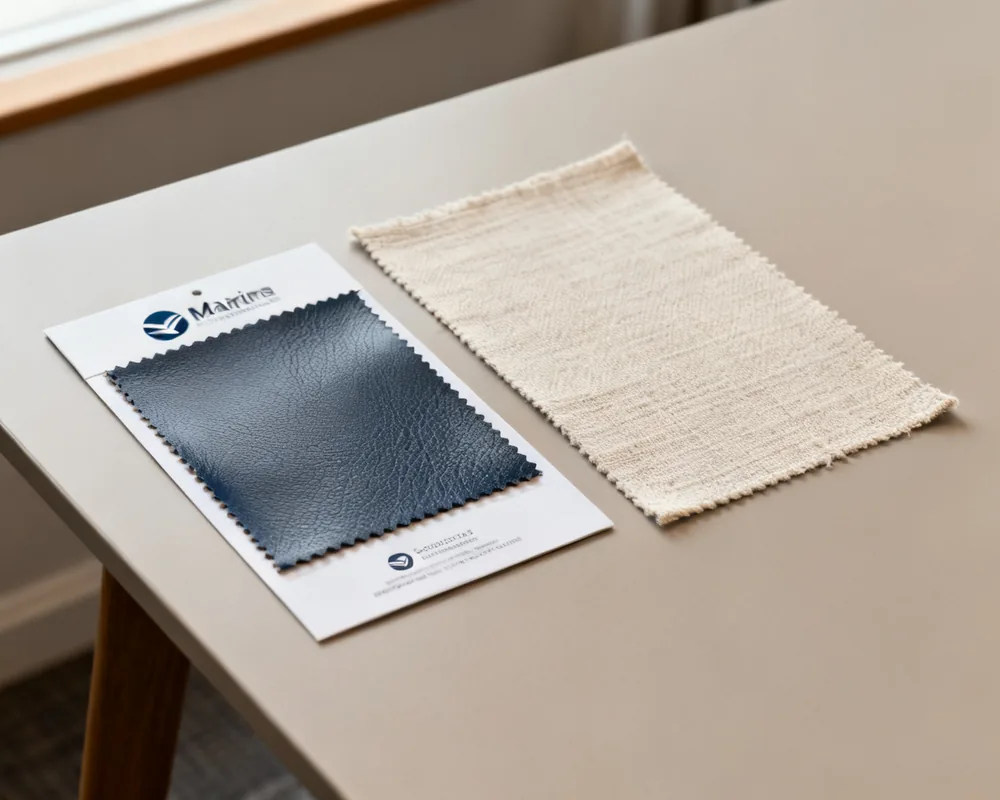
A cotton, wool, or linen upholstery cloth is a different construction from the coated vinyl this site discusses. Touch often comes from the yarn and the weave. Moisture can sit in the fibre, so care notes have to name the cleaner and whether the cloth is expected to dry in a cabin or a climate-controlled room. If a buyer is weighing a natural cloth against a marine vinyl, the useful record is the cloth actually specified: fibre percentage, weave, mass, usable width, and the finish already on that cloth. A generic preference for natural fibre does not describe seam behaviour on a wet cushion or colour hold under a hatch.
Recycled-content language, a farm scheme, or a mill statement belongs to the document that names the holder and the covered goods. This page does not transfer those words onto a vinyl reference, and it does not treat a natural-fibre story as evidence about Morbern face, backing, or bond.
Synthetic fibres
The published scope here is synthetic leather and coated fabric, read as upholstery vinyl for marine seating and contract interiors. The face polymer, any topcoat, the textile backing, and the bond are separate lines. Strength in a pattern, drying after spray, and resistance to a named cleaner are different questions. A PVC face and a polyurethane face should not be collapsed into one synthetic label. Four-way stretch, a firmer contract face, and a backed laminate can share a grain photograph and still diverge once they are sewn, wrapped, or left in heat.
Drying speed is not breathability. A coated face can shed liquid and still block vapour. If the brief needs a vapour figure, ask for the method and the specimen state. If the brief needs wipe-down behaviour, describe the chemistry. Leave both cells empty until a record for that construction exists. No plant output, recycled percentage, or end-of-life programme is published for this brand in the profile used here.
Avoid a single environmental ranking
| Dimension |
Question |
| Material source |
What face polymer, backing fibre, or natural-fibre blend is actually declared for the item being compared? |
| Processing |
Which coating, dye, topcoat, or bonding step is inside the statement, and which step is outside it? |
| Use and care |
Is the seat wiped, sprayed, shampooed, or left in sun, and does the care note match that routine? |
| End-of-use route |
What collection or recovery path is named for this construction, and who operates it? |
Use the four rows as a checklist, not as a score. A marine vinyl can suit spray and wipe-down, while a natural cloth can suit hand and indoor cleaning. Neither sentence is a life-cycle result. If a later declaration appears, keep the holder, the product scope, the date, and the construction on the same line. A new backing or topcoat reopens that line. Unknown recovery routes stay unknown.