Sample clarification desk
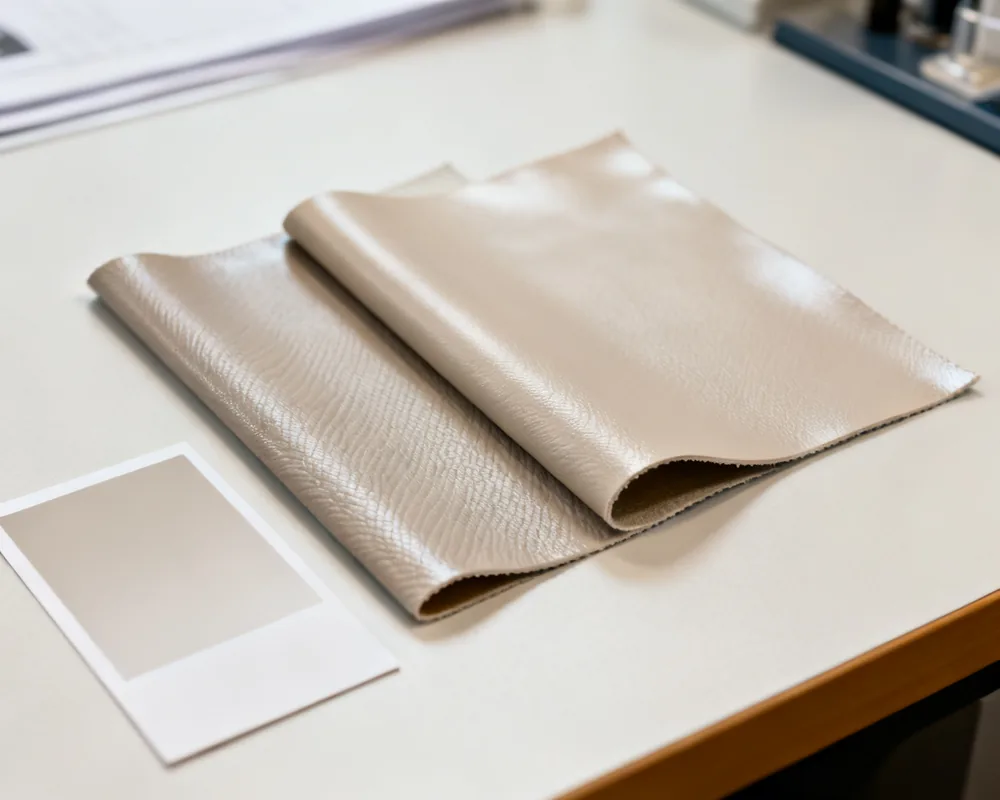
Describe the difference
Start from the piece in front of you. If the face is a marine upholstery vinyl, say whether the question is grain, colour, hand, four-way stretch, or the textile backing. Allsport, Allante, Prodigy, and Mellohide are names buyers already use in searches. Write the name if it helps locate the conversation, then add what the eye and the hand can check. A familiar name does not transfer a test result from one colourway or one backing to another.
Hold the sample the way the seat will see it. A cushion top, a side panel, and a wrapped arm do not stress the face and the bond in the same way. Note sunlight, spray, and the cleaner the yard or the facility actually uses. Those conditions decide whether a later report about abrasion, colourfastness, or seam slippage would even be the right document to request. They are not results this page can fill in.
- What should stay the same: grain family, nominal colour, or backing type.
- Which construction or finishing property needs review: topcoat, stretch, or bond.
- How will the next sample be assessed: side-by-side hand, a named method, or both.
Acceptance criteria belong in the trial note before anyone talks about bulk. Record the date on the reference piece, the light used for the colour check, and whether the comparison is face-only. If stretch matters, say whether you are looking at a black four-way construction or a firmer face that should not elongate the same way. If bonding matters, say what the vinyl will be joined to. Adhesive, sewing thread, and foam are different interfaces, and a finish record for one of them does not cover the others.
Quantity and destination come after the material difference is written down. They frame a commercial question. They do not prove that a roll length, a cut piece, or a shade band is on hand. If you need a supply format confirmed, name the format. Leave timing as a question unless a specific record already states it.
When the reference is incomplete
State the missing information rather than assume equivalence. A photograph can show grain direction and a colour hint. It cannot settle mass, usable width, coating add-on, or whether the backing is the one the pattern was cut for. If GSM or width is unknown, mark the field as open. If a certificate or a fibre brand is mentioned in someone else's note, ask who holds it and which product scope it names. This desk does not treat a logo on a swatch card as authorization, a factory identity, or a performance number.
Three limits stay in force on this desk. A sample request does not confirm that a swatch, a roll, or a shade band is available. A trade name does not carry abrasion resistance, colorfastness, seam slippage, or stretch recovery from one colour or one backing to another. A lamination note and a coating note are different builds; do not collapse them because the grain looks alike. Dimensional stability, pilling, hydrostatic head, water vapor transmission, tear strength, and tensile strength are request fields only when the use actually needs them, and each one needs its own method, date, and batch.